Accounting & Tax Services Sydney | TaxFlow Accounting Services

Category: Blog

Your blog category

  • How to Reduce Business Tax in Australia: Smart Tax Planning Strategies for Small Businesses

    How to Reduce Business Tax in Australia: Smart Tax Planning Strategies for Small Businesses

    Managing taxes effectively is one of the most important parts of running a successful business in Australia. Whether you own a small startup, retail business, construction company, consultancy, eCommerce brand, or service-based business, understanding how to reduce business tax legally can significantly improve profitability and long-term financial stability.

    Many Australian businesses end up paying more tax than necessary because of poor bookkeeping, lack of financial planning, missed deductions, or misunderstanding of Australian tax regulations. In many cases, business owners focus heavily on daily operations and customer management while overlooking important financial strategies that could reduce unnecessary tax expenses.

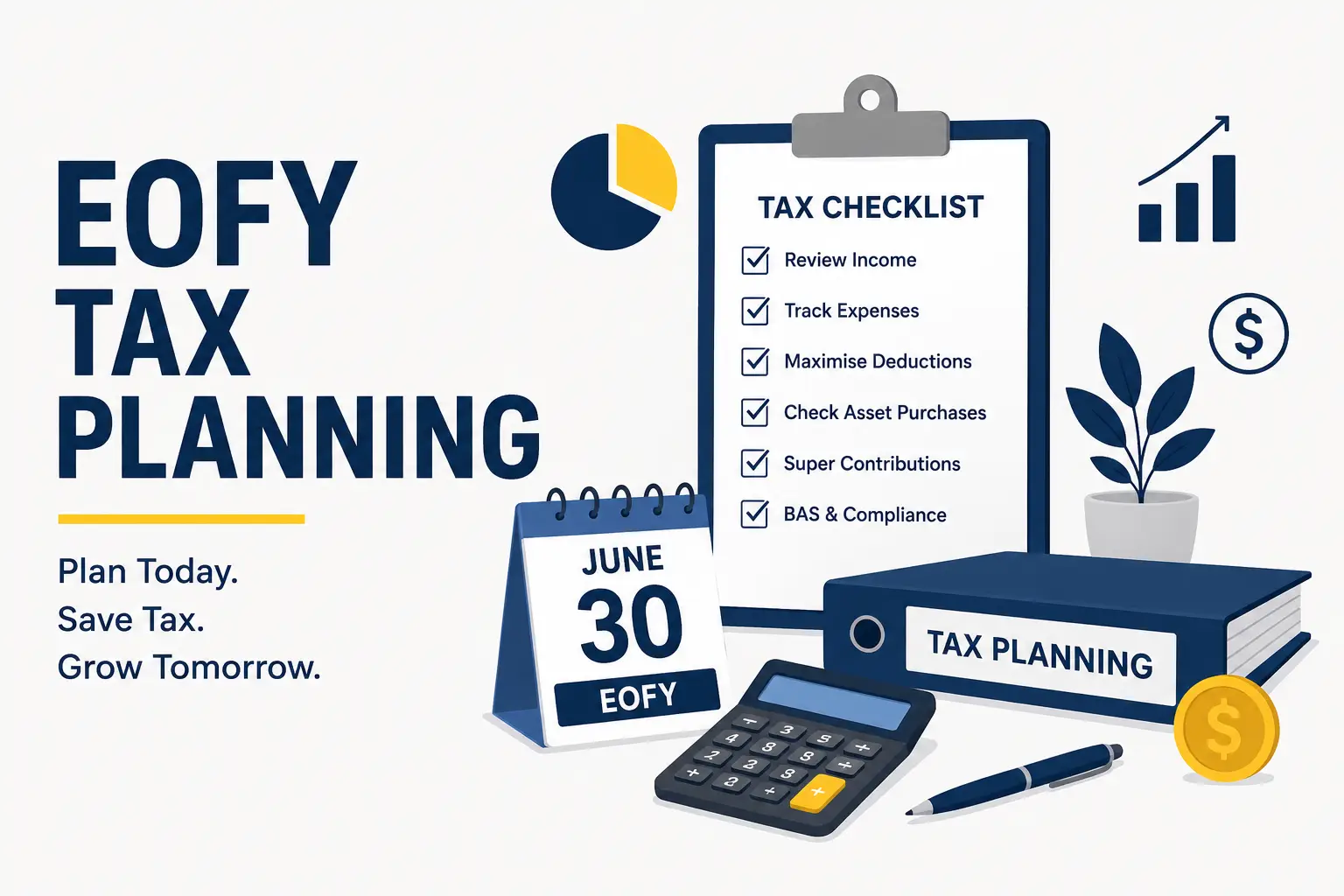
    Tax planning for small businesses is not about avoiding taxes illegally. Instead, it involves improving financial organisation, understanding eligible deductions, maintaining accurate records, and making smarter business decisions throughout the financial year. Businesses that plan early are usually more financially prepared during EOFY and less likely to face compliance issues with the Australian Taxation Office (ATO).

    This guide by Tax Flow Accounting Services explains practical ways businesses can improve tax efficiency, maximise business tax savings in Australia, and reduce financial stress through better accounting and financial management practices.

    Why Tax Planning Matters for Australian Businesses

    Tax planning plays a major role in the overall financial health of a business. Businesses that monitor their finances throughout the year are generally more profitable, organised, and prepared for tax obligations.

    Without proper planning, many businesses experience cash flow problems during EOFY because they are unprepared for tax liabilities. Some businesses also miss valuable deductions simply because financial records are incomplete or expenses were not tracked properly.

    Strong tax planning helps businesses improve budgeting, maintain compliance, reduce financial surprises, and make better operational decisions. For small businesses especially, proactive financial management can create long-term stability and support future growth opportunities.

    Businesses that regularly review income, expenses, payroll, and GST obligations usually have a much clearer understanding of their financial position. This allows them to make smarter decisions while avoiding unnecessary tax costs.

    Professional firms like Tax Flow Accounting Services help Australian businesses build stronger financial systems that support long-term tax efficiency and compliance.

    Understanding Business Tax Obligations in Australia

    Before businesses can reduce tax effectively, it is important to understand their financial responsibilities under Australian tax laws.

    Depending on the business structure, Australian businesses may need to manage income tax, GST reporting, BAS lodgements, payroll obligations, PAYG withholding, and superannuation contributions. Sole traders, partnerships, trusts, and companies all have different reporting requirements and tax structures.

    Many businesses face financial difficulties simply because they fail to understand these obligations properly. Inaccurate reporting, late lodgements, and poor bookkeeping often lead to penalties, compliance problems, and unnecessary stress.

    Understanding business tax responsibilities creates a stronger financial foundation and helps businesses identify legal opportunities to reduce taxable income.

    Accurate Bookkeeping Is the Foundation of Tax Savings

    One of the biggest reasons businesses overpay tax is poor bookkeeping. Without accurate financial records, businesses often fail to track deductible expenses properly or identify financial inefficiencies.

    Bookkeeping should never be treated as an afterthought. Maintaining organised financial records throughout the year makes tax preparation far easier and improves overall financial visibility.

    Accurate bookkeeping helps businesses monitor expenses, track income, reconcile transactions, manage invoices, and prepare BAS reports more efficiently. It also reduces the risk of financial errors and improves compliance with ATO requirements.

    Cloud accounting software such as Xero, MYOB, and QuickBooks has made bookkeeping much easier for Australian businesses. These systems automate many financial processes while providing real-time access to important business data.

    Businesses that invest in organised bookkeeping systems are generally better positioned to maximise deductions and reduce unnecessary tax expenses.

    Tax Flow Accounting Services supports businesses with professional bookkeeping and financial reporting solutions designed to improve tax accuracy and financial organisation.

    Claiming Business Tax Deductions Correctly

    Many Australian businesses fail to claim all eligible deductions because they either do not track expenses properly or are unaware of what they can legally claim.

    The ATO allows businesses to claim deductions for expenses directly related to generating business income. However, businesses must maintain accurate documentation to support these claims.

    Business-related expenses such as office costs, marketing, accounting services, internet bills, travel expenses, software subscriptions, tools, and employee wages may all contribute to lowering taxable income when managed correctly.

    Keeping receipts, invoices, and payment records is extremely important because incomplete documentation may create problems during audits or tax reviews.

    Small businesses often lose valuable savings opportunities simply because expenses were not recorded correctly throughout the financial year.

    Professional guidance from Tax Flow Accounting Services can help businesses identify legitimate deductions while ensuring compliance with Australian tax regulations.

    Separating Personal and Business Finances

    Many small business owners make the mistake of mixing personal and business transactions. This creates confusion during tax preparation and increases the risk of bookkeeping errors.

    Maintaining separate business bank accounts and credit cards improves financial organisation significantly. It becomes much easier to track business expenses, prepare reports, and identify deductible costs accurately.

    Separating finances also improves professionalism and gives businesses clearer financial visibility. Business owners can better understand profitability, spending patterns, and operational costs without personal expenses affecting financial reports.

    This simple habit can make a major difference during EOFY preparation and overall tax management.

    Investing in Business Growth Can Also Improve Tax Efficiency

    Strategic business investments may also help reduce taxable income while supporting long-term growth.

    Many businesses purchase equipment, software, tools, or technology upgrades throughout the year to improve operations. Depending on current Australian tax regulations, some of these investments may qualify for deductions or depreciation benefits.

    Businesses should always approach purchases strategically rather than making unnecessary spending decisions purely for tax reasons. Smart investments should support operational growth while also improving financial efficiency.

    Working with professional accountants can help businesses understand how asset purchases may affect tax obligations and financial planning.

    Tax Flow Accounting Services helps businesses create smarter financial strategies that balance growth opportunities with tax efficiency.

    Managing Payroll and Superannuation Properly

    Payroll compliance is another critical area of business tax management in Australia.

    Incorrect payroll reporting or late superannuation payments can create financial penalties and compliance issues with the ATO. Businesses must ensure employee wages, PAYG withholding, and superannuation contributions are managed accurately throughout the year.

    Proper payroll systems also improve bookkeeping accuracy and reduce administrative errors during EOFY preparation.

    Businesses that maintain organised payroll records are usually better prepared for tax season and less likely to experience compliance problems.

    Professional payroll support from Tax Flow Accounting Services can help businesses simplify payroll management while improving compliance accuracy.

    Improving Cash Flow Before EOFY

    Cash flow management becomes especially important during tax season. Many businesses struggle financially during EOFY because they have not prepared properly for upcoming tax obligations.

    Setting aside money regularly for taxes can reduce financial stress significantly. Businesses that allocate a portion of revenue toward tax obligations throughout the year are generally more stable financially.

    Improving invoice collection processes and reducing overdue payments can also strengthen cash flow before BAS and tax deadlines approach.

    Strong cash flow management not only supports tax preparation but also improves overall business sustainability.

    BAS and GST Reporting Should Never Be Delayed

    Businesses registered for GST must submit BAS reports accurately and on time. Incorrect GST calculations and late BAS lodgements are among the most common tax mistakes Australian businesses make.

    Many businesses wait until deadlines are close before reviewing financial records, which often results in rushed reporting and costly errors.

    Reviewing GST transactions regularly throughout the year improves accuracy and reduces compliance risks. Businesses that prepare BAS reports early have more time to identify financial discrepancies and correct mistakes before lodgement.

    Proper GST management also improves overall financial organisation and reporting quality.

    Tax Flow Accounting Services provides BAS and GST reporting support to help businesses maintain compliance and avoid unnecessary penalties.

    Professional Accounting Services Can Help Reduce Tax Legally

    Professional accounting services in Australia provide businesses with valuable financial expertise that often leads to better tax efficiency and improved compliance.

    Experienced accountants understand Australian tax laws, deduction opportunities, reporting requirements, and financial planning strategies. They help businesses identify legal ways to reduce tax while maintaining accurate records and strong compliance standards.

    Many businesses unknowingly overpay tax because they lack professional financial guidance. Working with accountants helps businesses improve bookkeeping, manage BAS lodgements properly, prepare financial reports accurately, and develop long-term tax planning strategies.

    Professional accountants also help reduce financial stress by ensuring businesses remain organised and prepared throughout the year.

    Tax Flow Accounting Services works closely with Australian businesses to deliver personalised accounting solutions that improve financial management and support long-term business growth.

    EOFY Preparation Should Happen All Year

    One of the biggest mistakes businesses make is treating EOFY preparation as a once-a-year task.

    Businesses that review financial performance regularly throughout the year are generally more financially organised and less stressed during tax season. Regular financial reviews help identify potential problems early while improving budgeting and cash flow planning.

    Consistent financial management also creates better opportunities for tax savings because businesses can monitor expenses, deductions, and profitability more effectively.

    EOFY preparation should be viewed as an ongoing process rather than a last-minute responsibility.

    Common Reasons Businesses Overpay Tax

    Many Australian businesses lose money every year due to avoidable financial mistakes. Poor bookkeeping, missing receipts, inaccurate GST reporting, and a lack of tax planning are among the most common issues.

    Some businesses also fail to seek professional advice until financial problems become serious. Others miss deduction opportunities because records were incomplete or expenses were not tracked properly.

    Mixing personal and business finances, delaying BAS preparation, and ignoring cash flow management also contribute to higher tax liabilities.

    Avoiding these mistakes can significantly improve financial efficiency and overall business profitability.

    The Future of Tax Planning in Australia

    Technology is changing how businesses manage taxes and financial reporting across Australia. Cloud accounting software, automation tools, and AI-powered financial systems are helping businesses improve accuracy and streamline financial management.

    Modern accounting firms now provide more strategic advisory services alongside traditional bookkeeping and tax preparation support. Businesses are increasingly adopting digital financial systems because they improve visibility, efficiency, and long-term scalability.

    As tax regulations continue to evolve, businesses that invest in proactive financial management and professional accounting support will be better positioned for future growth.

    Tax Flow Accounting Services continues to help Australian businesses adapt to modern accounting technologies and smarter financial planning practices.

    Conclusion

    Reducing business tax legally in Australia requires much more than simple EOFY preparation. Businesses need accurate bookkeeping, organised financial systems, proper documentation, strong cash flow management, and proactive tax planning throughout the year.

    Many businesses overpay tax because they overlook deductions, delay financial reviews, or fail to maintain proper records. Improving financial organisation and seeking professional accounting support can create significant long-term savings opportunities.

    From managing payroll and GST reporting to improving bookkeeping and financial planning, every part of the accounting process contributes to better tax efficiency and stronger business stability.

    For Australian businesses looking to improve profitability and reduce unnecessary tax expenses, smart financial planning remains one of the most valuable long-term strategies. Tax Flow Accounting Services helps businesses simplify accounting, improve compliance, and create stronger financial foundations for future growth.

    Frequently Asked Questions

    How can businesses reduce tax legally in Australia?

    Businesses can reduce tax legally by maintaining accurate records, claiming eligible deductions, improving bookkeeping, and working with professional accountants.

    Why do businesses overpay tax?

    Many businesses overpay tax because of poor bookkeeping, missed deductions, inaccurate reporting, and lack of financial planning.

    What are common business tax deductions?

    Common deductions include office expenses, accounting services, software subscriptions, marketing costs, vehicle expenses, and employee wages.

    Why is bookkeeping important for tax planning?

    Bookkeeping helps businesses track expenses accurately, improve financial visibility, and prepare proper financial reports for tax purposes.

    Can accountants help businesses save money on tax?

    Professional accountants help businesses identify legal tax-saving opportunities, improve compliance, and create stronger financial strategies.

  • Benefits of Outsourcing Accounting Services in Australia for Small Businesses

    Benefits of Outsourcing Accounting Services in Australia for Small Businesses

    Running a business in Australia involves much more than generating sales or managing customers. Business owners also need to handle bookkeeping, payroll, tax obligations, BAS lodgements, financial reporting, and cash flow management. For many small and medium-sized businesses, managing these financial responsibilities internally can become stressful, time-consuming, and expensive.

    This is why outsourcing accounting services in Australia has become a growing trend across multiple industries. Businesses are increasingly choosing professional accounting services to manage financial operations more efficiently while focusing on business growth and customer satisfaction.

    Professional accounting firms such as Tax Flow Accounting Services help Australian businesses streamline their finances, stay compliant with Australian Taxation Office (ATO) regulations, and improve overall financial management. Outsourcing accounting tasks not only reduces operational pressure but also provides access to expert financial knowledge that can support long-term business success.

    What Are Outsourced Accounting Services?

    Outsourced accounting services refer to hiring an external accounting firm to manage financial tasks instead of employing a full in-house accounting department.

    These services may include bookkeeping, payroll processing, BAS and GST lodgements, tax planning, financial reporting, budgeting, and cash flow management. Some firms also provide strategic business advisory services that help businesses improve profitability and financial performance.

    For small businesses in Australia, outsourcing accounting functions can provide professional expertise without the high costs associated with maintaining internal staff.

    Why Outsourcing Accounting Services Is Growing in Australia

    Australian businesses are operating in an increasingly competitive and regulated environment. Tax requirements, payroll obligations, and compliance standards continue to evolve, making financial management more complex than ever before.

    At the same time, many small businesses do not have the budget to hire experienced full-time accountants. Managing accounting internally often results in additional expenses such as salaries, software costs, office infrastructure, and employee benefits.

    Outsourcing accounting services offers a more flexible and cost-effective solution. Businesses gain access to experienced professionals who understand Australian financial regulations while avoiding the overhead costs of an internal accounting team.

    This approach allows businesses to focus more on growth while maintaining strong financial management practices.

    Reduced Operational Costs

    One of the biggest benefits of outsourcing accounting services in Australia is cost reduction.

    Hiring in-house accountants can place financial pressure on small businesses. Beyond salaries, businesses may also need to pay for superannuation, leave entitlements, accounting software subscriptions, office equipment, and ongoing staff training.

    Outsourcing allows businesses to access professional accounting services at a lower cost because they only pay for the services they require.

    Lower Staffing Expenses

    Instead of maintaining a full accounting department, businesses can work with outsourced professionals on flexible service arrangements. This helps reduce labour costs while still ensuring financial tasks are managed properly.

    Reduced Software and Infrastructure Costs

    Professional accounting firms already use advanced accounting systems and cloud-based technology. Businesses benefit from these tools without investing heavily in expensive financial software or IT infrastructure.

    Access to Professional Financial Expertise

    Accounting involves much more than basic bookkeeping. Businesses in Australia must comply with tax laws, GST regulations, payroll obligations, and financial reporting standards.

    Professional accounting services in Australia provide businesses with access to experienced accountants who understand these complex requirements.

    Industry-Specific Knowledge

    Experienced accounting firms often work with businesses across multiple industries such as retail, construction, healthcare, e-commerce, and hospitality. This gives them valuable industry insights that can help businesses improve financial management.

    Updated Knowledge of Australian Tax Laws

    Tax laws and ATO regulations change regularly. Professional accountants stay updated with these changes, helping businesses remain compliant while identifying legal tax-saving opportunities.

    Better ATO Compliance

    ATO compliance is one of the most important responsibilities for Australian businesses. Mistakes in tax reporting or BAS lodgements can result in penalties, audits, and unnecessary financial complications.

    Outsourced accounting professionals help businesses maintain accurate records and meet important reporting deadlines.

    Accurate BAS and GST Lodgements

    Professional accountants ensure BAS reports and GST calculations are completed accurately and submitted on time.

    Reduced Risk of Penalties

    By maintaining proper financial records and compliance procedures, businesses reduce the risk of late lodgements, reporting errors, and ATO penalties.

    More Time to Focus on Business Growth

    Managing accounting internally often takes significant time away from important business activities. Many business owners spend hours every week handling invoices, payroll, bookkeeping, and tax preparation.

    Outsourcing accounting services allows businesses to focus more on operations, marketing, customer service, and business expansion.

    Improved Productivity

    Business owners can spend more time growing revenue and improving customer relationships rather than dealing with administrative and financial tasks.

    Reduced Business Stress

    Financial management can become overwhelming, especially during tax season. Professional accounting support helps reduce stress and improve operational efficiency.

    Improved Cash Flow Management

    Cash flow management is essential for maintaining business stability and long-term growth. Even profitable businesses can face financial difficulties if cash flow is poorly managed.

    Professional accounting services help businesses monitor financial performance more effectively through accurate reporting and forecasting.

    Better Financial Visibility

    Accountants provide regular financial reports that help businesses understand income, expenses, profits, and outstanding payments.

    Smarter Financial Planning

    With proper cash flow forecasting, businesses can prepare for seasonal fluctuations, investments, and future growth opportunities more confidently.

    Access to Modern Accounting Technology

    Cloud accounting technology has transformed financial management across Australia. Many professional accounting firms now use advanced software platforms such as Xero, MYOB, and QuickBooks.

    These systems improve accuracy, automation, and financial accessibility.

    Real-Time Financial Reporting

    Cloud accounting allows businesses to access financial data anytime, making it easier to monitor performance and make informed decisions.

    Automated Bookkeeping Processes

    Automation reduces manual data entry and improves financial accuracy, helping businesses save time and minimise errors.

    Reduced Financial Errors

    Financial errors can negatively impact business operations, tax compliance, and profitability.

    Professional accountants use structured systems and review processes to ensure accuracy across bookkeeping, payroll, and reporting functions.

    Improved Accuracy

    Accurate financial records help businesses avoid compliance problems and make better financial decisions.

    Stronger Financial Stability

    Reliable accounting data supports loan applications, investor confidence, and long-term business planning.

    Strategic Financial Advice for Business Growth

    Modern accounting firms provide more than bookkeeping and tax services. Many now offer strategic advisory support that helps businesses improve financial performance.

    Professional accountants can assist with budgeting, forecasting, tax planning, and profitability analysis.

    Better Decision-Making

    Access to professional financial insights helps business owners make informed operational and investment decisions.

    Long-Term Growth Planning

    Strategic accounting support helps businesses identify growth opportunities while maintaining financial stability.

    Why Small Businesses Benefit the Most

    Small businesses often operate with limited internal resources. Business owners may manage multiple responsibilities, including sales, operations, customer service, and finance simultaneously.

    Outsourcing accounting services allows small businesses to access expert financial support without the cost of building a full internal accounting team.

    Industries that commonly benefit from outsourced accounting services in Australia include:

    • Tradies and construction businesses
    • Retail stores
    • eCommerce businesses
    • Restaurants and cafes
    • Medical clinics
    • Freelancers and consultants
    • Digital marketing agencies
    • Startups and growing businesses

    Professional accounting support helps these businesses remain organised, compliant, and financially efficient.

    The Future of Outsourced Accounting Services in Australia

    The Australian accounting industry continues to evolve through automation, AI-powered systems, and cloud-based financial management tools.

    Businesses increasingly prefer outsourced accounting because it offers flexibility, scalability, and access to advanced expertise without high operational costs.

    Professional accounting firms are also becoming long-term financial partners for businesses by providing strategic advisory services alongside traditional accounting support.

    As compliance requirements continue to grow, outsourced accounting services will become even more valuable for Australian businesses seeking efficient financial management.

    How Tax Flow Accounting Services Supports Australian Businesses

    Tax Flow Accounting Services provides professional accounting services tailored to the needs of Australian businesses.

    From bookkeeping and payroll management to BAS lodgements and tax planning, outsourced accounting solutions help businesses improve financial organisation while staying compliant with ATO regulations.

    Professional financial support allows businesses to focus more on growth, customer service, and operational efficiency while ensuring financial responsibilities are managed accurately.

    Conclusion

    Outsourcing accounting services in Australia has become a smart and practical solution for businesses looking to improve financial management, reduce operational costs, and maintain compliance.

    Professional accounting services provide businesses with expert financial guidance, better cash flow management, reduced administrative stress, and stronger operational efficiency.

    For small businesses especially, outsourced accounting creates opportunities to scale more effectively while focusing on long-term growth.

    Working with experienced professionals like Tax Flow Accounting Services helps Australian businesses simplify financial management while building a stronger foundation for future success.

    Frequently Asked Questions

    What are outsourced accounting services?

    Outsourced accounting services involve hiring an external accounting firm to manage financial tasks such as bookkeeping, payroll, tax reporting, BAS lodgements, and financial planning.

    Why do Australian businesses outsource accounting services?

    Businesses outsource accounting to reduce operational costs, improve financial accuracy, maintain ATO compliance, and save time.

    Is outsourced accounting suitable for small businesses?

    Yes. Outsourced accounting is highly beneficial for small businesses because it provides access to professional financial expertise without the expense of maintaining an in-house accounting department.

    Can outsourced accountants help with tax planning?

    Professional accounting firms can help businesses identify legal tax-saving opportunities, manage deductions, and improve overall financial planning.

    What accounting software is commonly used in Australia?

    Many accounting firms in Australia use cloud-based software such as Xero, MYOB, and QuickBooks for bookkeeping and financial reporting.