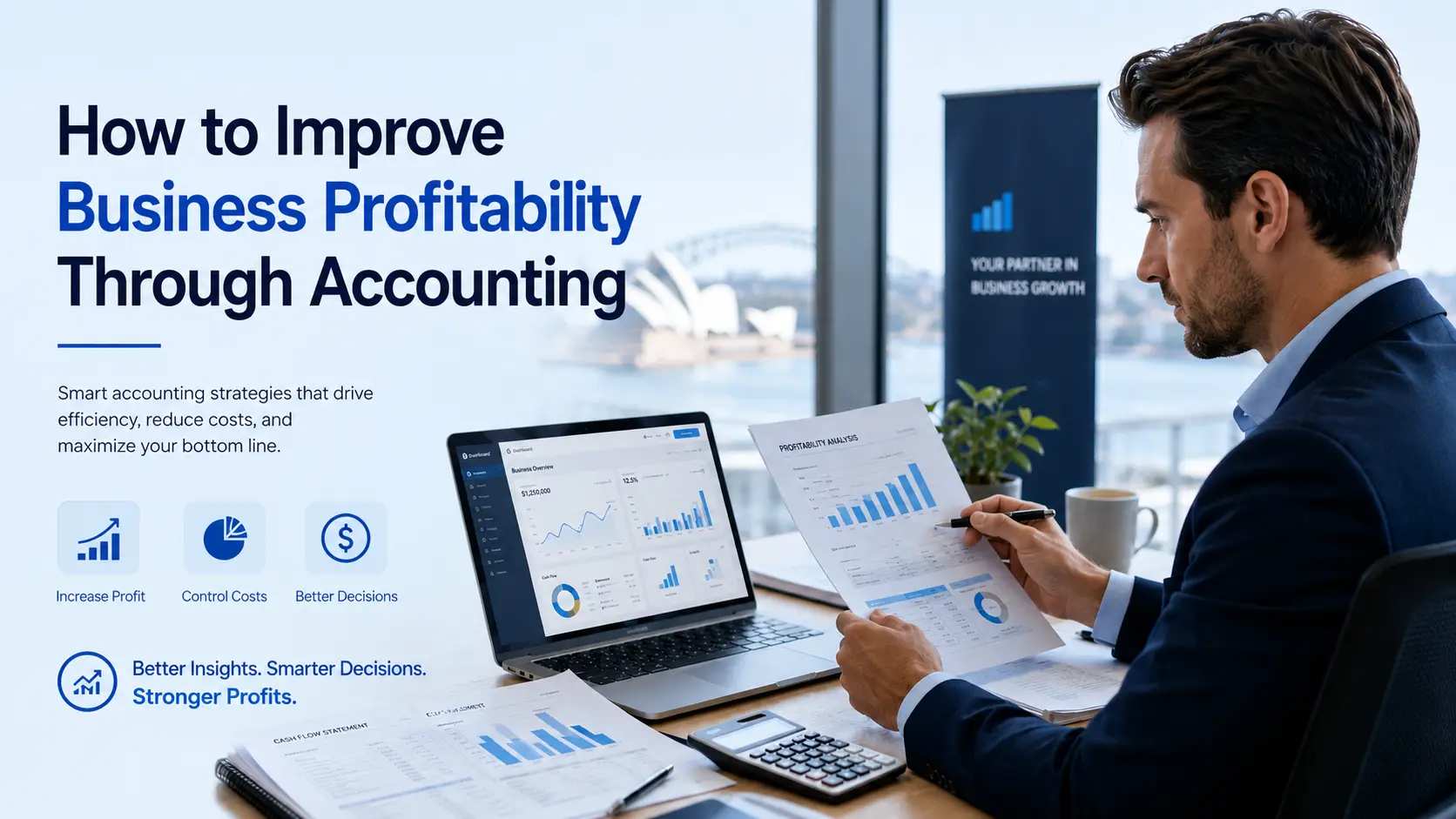

Running a business in Sydney is an exciting journey, but it certainly comes with its fair share of hurdles. From navigating a fast-paced market to managing rising operational costs, business owners constantly face roadblocks that test their resilience. To achieve sustainable business growth in Sydney, companies must adapt to changing market conditions, improve financial performance, and make strategic decisions that support long-term success.
To survive and truly thrive, relying on intuition alone isn’t enough anymore. Small and medium-sized enterprises (SMEs) need high-level strategic direction to stay ahead. That is where professional business advisory services in Sydney step in, acting as a GPS for your company’s future by turning your daily operational challenges into clear pathways for long-term expansion. With expert guidance and data-driven insights, businesses can unlock new opportunities for business growth in Sydney, improve profitability, and build a stronger foundation for the future.
What Are Business Advisory Services?
Definition of Business Advisory Services
Business advisory services provide expert, objective guidance to help business owners solve problems, improve performance, and scale effectively. Think of an advisor as a strategic partner who evaluates your entire organization not just your taxes to find ways to build a more efficient and profitable operation.
Difference Between Accounting and Business Advisory
Many business owners assume that if they have an accountant, they already have an advisor. However, these two roles serve very different purposes:
Traditional Accounting
This is backward-looking. An accountant focuses on historical data, financial compliance, and tax lodgements. They tell you exactly what happened last quarter or last year to ensure you tick all the boxes for the Australian Taxation Office (ATO).
Business Advisory
This is forward-looking. An advisor takes those historical tax figures and transforms them into predictive blueprints for the future. Instead of just tallying your historical expenses, they focus on boosting your future profit margins, optimizing cash reserves, and designing execution plans to scale your business.
Who Can Benefit from Business Advisory Services?
Any business looking to scale, fix internal inefficiencies, or navigate a period of transition can benefit from professional advisory support. Whether you are an established local e-commerce store trying to expand your warehouse operations, a fast-growing café group aiming to open a secondary location in Parramatta, or a service-based agency struggling with unpredictable monthly income, strategic advisory provides the external clarity you need to take the next step confidently.
Why Sydney Businesses Need Business Advisory Services
Increasing Competition in Sydney’s Business Environment
Sydney is one of the most dynamic yet fiercely competitive commercial landscapes in the southern hemisphere. With digital transformation lowering entry barriers across nearly every industry, local businesses find themselves competing not just with the shop down the street, but with national and global digital platforms. Standing out requires a sharp, data-driven approach to pricing, marketing, and customer retention.
Economic and Financial Challenges
Operating a commercial entity in New South Wales carries significant overheads. High commercial rents, escalating utility costs, competitive local wage markets, and shifting supply chain logisitics can quickly shrink your margins. Without careful financial oversight, even a busy business with high top-line sales can quickly run out of cash.
The Need for Data-Driven Decision Making
The era of making major business decisions purely based on a “gut feeling” is over. In a premium market like Sydney, an uncalculated risk can lead to a costly mistake. Modern business success relies on data-driven decisions—using real-time metrics, clear industry benchmarks, and precise financial forecasting to guide every single move you make.
Key Areas Covered by Business Advisory Services
Strategic Business Planning
A business without a solid plan is simply reacting to the market instead of shaping it.
Setting Business Goals: Establish concrete, realistic targets for revenue, profit, and market share.
Creating Growth Roadmaps: Outline step-by-step operational strategies to achieve those targets without overextending your existing team.
Financial Performance Analysis
Your financial statements contain a wealth of hidden information about your daily operations.
Understanding Financial Reports: Move past the surface numbers to understand what your balance sheets and income statements are actually saying about your structural efficiency.
Identifying Strengths and Weaknesses: Pinpoint exactly which divisions or services are generating healthy returns and which ones are quietly draining your resources.
Cash Flow Management
A business can be highly profitable on paper but still fail if it runs out of physical cash at the wrong moment.
Improving Liquidity: Optimize your invoicing structures and payment terms to get cash into your business bank account faster.
Forecasting Future Cash Needs: Map out your projected income and expenses up to six months in advance, giving you the foresight to handle seasonal slowdowns or confidently fund upcoming inventory purchases.
Budgeting and Forecasting
A budget should never be a static document that you lock away in a drawer. It needs to be an active blueprint for your daily operations.
Creating Realistic Budgets: Align your spending directly with your current income realities, ensuring every dollar spent helps move the needle forward.
Planning for Growth: Model out future financial scenarios to understand the costs and expected returns of expanding your team or launching a new product line.
Risk Management
As your business expands, your risk profile changes. Protecting your hard work requires a proactive defense strategy.
Identifying Business Risks: Spot potential vulnerabilities, from single-supplier dependencies to changing industry compliance regulations.
Developing Mitigation Strategies: Build clear contingency plans to protect your operations and cash flow from unexpected market shifts.
How Business Advisory Services Turn Financial Data into Growth Opportunities
Raw numbers can feel dry and overwhelming, but to a seasoned business advisor, they reveal your company’s true potential. Expert business consulting services in sydney know exactly how to turn those spreadsheets into actionable growth.
[Raw Financial Statements] ➔ [Advisory Diagnosis] ➔ [Strategic Growth Plan]
- Expense Tracking – High Overhead Spotted – Lean Resource Allocation
- Sales by Category – Thin Product Margins – High-Value Core Focus
Identifying Revenue Growth Opportunities
Advisors sort your sales data by category, location, and demographic to find your most reliable sources of income. They often uncover hidden micro-markets or high-performing services that you can rapidly scale up.
Improving Profit Margins
Bringing in more revenue doesn’t help if your expenses grow at the exact same rate. Advisors deep-dive into your cost of goods sold (COGS) and labor efficiency to maximize the actual profit you take home from every dollar earned.
Reducing Unnecessary Business Costs
Over time, minor operational inefficiencies can quietly pile up. An advisor reviews your supplier agreements, software subscriptions, and overhead structures to clean up waste without compromising the quality of your output.
Optimizing Operational Efficiency
Time is money. Advisors analyze your labor costs relative to your operational output, helping you streamline workflows, automate repetitive manual tasks, and structure your team for maximum productivity.
Supporting Better Investment Decisions
Should you buy that new piece of machinery? Is it the right time to sign a lease on a second location? An advisor runs a comprehensive cost-benefit analysis to ensure any major capital expenditure delivers a strong, predictable return on investment (ROI).
Benefits of Hiring a Business Advisory Company in Sydney
Partnering with an experienced business advisory company in sydney provides significant advantages that ripple across your entire organization:
Improved Business Decision-Making: Replace uncertainty with clarity by relying on concrete data, market benchmarks, and professional financial validation.
Better Cash Flow Control: Enjoy peace of mind with structured cash reserves, predictable collection cycles, and clear visibility over your upcoming expenses.
Increased Profitability: Protect your margins through strategic pricing models, optimized operations, and disciplined expense management.
Stronger Business Performance: Align your management team, optimize your workflows, and build a more resilient organization.
Long-Term Growth and Sustainability: Build a healthy, balanced business model designed to scale sustainably for years to come.
Common Business Challenges Solved by Advisory Services
If you are running into roadblocks, you don’t have to figure them out on your own through trial and error. Advisory services provide proven frameworks to solve the most common operational headaches:
Declining Profit Margins: Reversing the trend of working harder while taking home less by identifying and fixing hidden cost leaks.
Cash Flow Issues: Restructuring slow client payment terms and adjusting inventory cycles to fix persistent cash shortages.
Business Expansion Planning: Navigating the complex financial modeling and logistical steps required to break into new markets safely.
Rising Operating Costs: Restructuring supply chains and renegotiating vendor contracts to offset local inflation pressures.
Lack of Clear Business Direction: Breaking through operational fog with clear 12-month roadmaps and measurable performance milestones.
Business Advisory Services for Small Businesses in Sydney
Why Small Businesses Need Expert Guidance
Small business owners frequently wear every single hat in the company acting as the head of sales, human resources, operations, and customer service all at once. When you are entirely caught up in the daily grind, it can be incredibly difficult to step back and analyze your business objectively. An advisor provides that vital, big-picture perspective.
Growth Planning for SMEs
Scaling a small business requires a completely different approach than running an enterprise-level corporation. Advisors help SMEs design agile growth plans that let them punch well above their weight class while staying incredibly lean and responsive to the local market.
Financial Management Support
Many small business owners have a fantastic product or service but lack formal training in corporate finance. An advisor breaks down complex concepts like working capital ratios and margin analysis into simple, practical business tools.
Building a Scalable Business Model
The ultimate goal of smart growth is to build a business that can eventually run smoothly without relying on your constant physical presence. Advisors help you docuement core processes, implement reliable software, and delegate key responsibilities, turning your business into a truly scalable asset.
Signs It’s Time to Hire a Business Advisor
Revenue Growth Has Stalled: You’ve hit a structural ceiling and your sales numbers have flattened out over the last few quarters.
Cash Flow Is Becoming Difficult to Manage: You are consistently busy with clients, yet you find yourself stressed about making payroll or paying suppliers at the end of every month.
Expansion Plans Require Expert Guidance: You are ready to launch a new product line or location, but you need a validated financial model to de-risk the move.
Business Decisions Feel Uncertain: You find yourself hesitating on critical business choices because you lack clear, reliable financial data to back them up.
Why Choose Tax Flow Accounting Services for Business Advisory Services in Sydney?
When it comes to securing the future of your company, you need an advisory partner who understands the local landscape inside and out. Tax Flow Accounting Services combines deep technical expertise with practical, growth-focused strategies tailored to your exact business needs.
Personalized Business Advice
We don’t believe in generic templates or one-size-fits-all checklists. We take the time to deeply understand your specific operational bottlenecks, family dynamics, and long-term personal goals to build an advisory plan that fits your life.
Financial Expertise and Industry Knowledge
Our professional team brings years of practical experience navigating Sydney’s unique economic sectors from retail and professional services to e-commerce and local hospitality. We ensure your financial compliance is completely locked down while actively uncovering hidden paths to growth. Learn more about our comprehensive foundational support through our Accounting services in Sydney.
Growth-Focused Advisory Solutions
We treat your numbers as an active launchpad for expansion focus heavily on building sustainable cash reserves, optimizing your margins, and creating clear operational roadmaps.
Ongoing Support for Business Success
True business growth doesn’t happen during a single consulting session. We partner with you for the long haul, providing regular performance check-ins, up-to-date financial dashboard reviews, and clear accountability to ensure your business hits its targets month after month.
Conclusion
Your financial records shouldn’t just be an administrative chore that you hand over to an accountant once a year for tax compliance. When analyzed through a strategic lens, your financial numbers reveal a clear roadmap to your next major business breakthrough.
From untangling persistent cash flow bottlenecks to uncovering hidden margin drains and mapping out sustainable expansion, partnering with professional business advisors gives you the data-driven clarity needed to transform daily business challenges into reliable growth.
Don’t let the daily operational grind hold your business back from its true potential. Take control of your financial future today, move past simple baseline compliance, and start proactively scaling your business with confidence.
FAQ Sections
What are business advisory services?
Business advisory services provide strategic, forward-looking guidance to help business owners analyze their operations, optimize financial performance, overcome growth bottlenecks, and build highly scalable business models.
How can business advisory services help my business grow?
Advisors deep-dive into your financial metrics to identify your most profitable revenue lines, eliminate hidden cost leaks, improve your overall cash flow cycles, and create actionable, data-backed expansion plans.
What is the difference between accounting and business advisory?
Traditional accounting focuses primarily on historical records and tax compliance (looking at what has already happened). Business advisory focuses entirely on future strategy, financial modeling, and operational improvement (planning what will happen next).
Do small businesses need business advisory services?
Yes, absolutely. Small businesses often operate with tight margins and limited resources, making data-driven strategy and protective cash flow forecasting crucial to their survival and long-term scaling success.
How often should I meet with a business advisor?
While this varies based on your specific goals and pace of growth, most businesses find great value in monthly or quarterly strategic reviews to monitor performance metrics, adjust operational budgets, and keep long-term expansion plans on track.
Why should I choose a business advisory company in Sydney?
A local Sydney advisor understands the specific regional market pressures, local payroll tax regulations, real estate dynamics, and industry benchmarks unique to New South Wales, ensuring you receive highly practical, relevant advice.