
Introduction
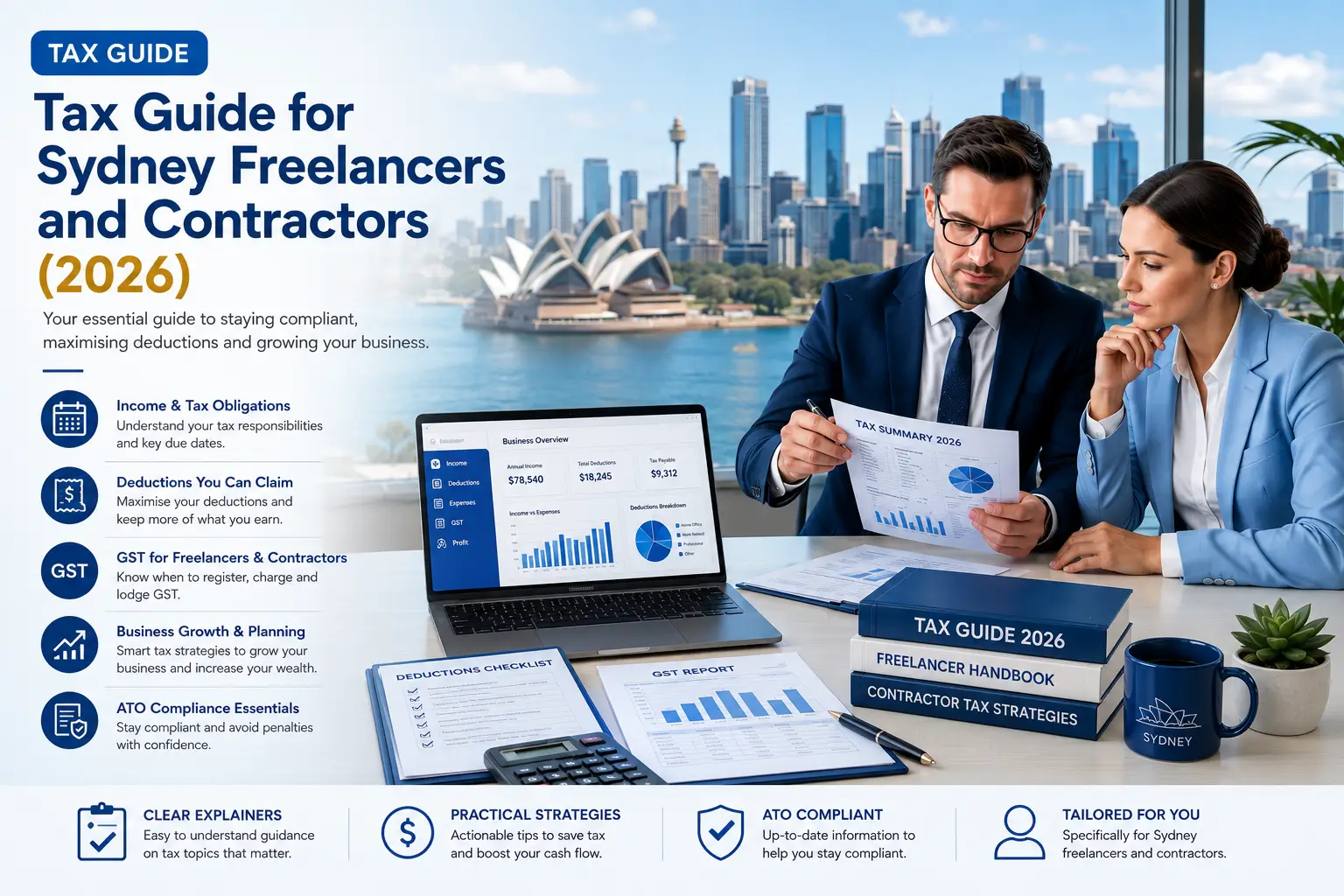
Tax Guide for Sydney freelancers and contractors is essential for anyone navigating the rapidly growing freelance economy in Australia. The freelance sector in Australia has experienced remarkable growth over the last few years, and Sydney has become one of the country’s biggest hubs for independent professionals, consultants, contractors, and sole traders. From graphic designers and software developers to marketing consultants, tradies, photographers, writers, and digital creators, thousands of professionals are choosing flexible self-employment over traditional jobs.
While freelancing offers independence and unlimited earning potential, it also comes with financial responsibilities that employees rarely have to think about. Managing invoices, keeping business records, lodging tax returns, understanding GST obligations, and claiming eligible deductions can quickly become overwhelming if you don’t understand the Australian tax system.
This comprehensive freelancer tax guide has been created specifically for Sydney freelancers and contractors who want to understand their tax obligations while maximising legitimate deductions. Whether you are just starting your freelance journey or have been operating independently for years, proper tax planning can save you thousands of dollars every financial year.
Many professionals searching for a Sydney freelancer tax guide are looking for practical information rather than complicated tax legislation. This article explains everything in simple language while helping you understand how to remain compliant with Australian tax laws.
Who Is Considered a Freelancer or Contractor in Australia?
Freelancers and contractors are individuals who provide services independently instead of working as permanent employees. Unlike salaried workers who receive wages through payroll systems, freelancers invoice clients directly and manage their own tax obligations.
Sydney has one of Australia’s largest freelance communities, with professionals working across numerous industries including digital marketing, IT consulting, photography, graphic design, content writing, construction, accounting, education, engineering, healthcare consulting, and business advisory services.
Many freelancers operate as sole traders using an Australian Business Number (ABN), while others choose company structures as their businesses grow. Regardless of the business structure, understanding freelancer tax responsibilities is essential for avoiding unnecessary penalties and ensuring compliance with Australian Taxation Office (ATO) regulations.
Unlike employees, freelancers are responsible for tracking their own income, maintaining business records, claiming deductions, paying income tax, and meeting GST obligations where applicable. This additional responsibility makes tax planning an important part of running a successful freelance business.
Why Understanding Freelancer Tax Is So Important
Many first-time freelancers assume tax works exactly the same way as employment income. Unfortunately, this misunderstanding often leads to unexpected tax bills and compliance issues at the end of the financial year.
Since no employer automatically deducts tax from freelance income, freelancers need to budget for future tax payments throughout the year. Without proper planning, many independent professionals find themselves owing significant amounts during tax season.
Understanding freelancer tax rules allows you to make informed financial decisions, claim every legitimate business expense, and reduce taxable income legally. It also helps you maintain proper records that can support your deductions if the ATO ever requests evidence.
Professional tax planning also improves cash flow management because freelancers know exactly how much money should be reserved for taxation rather than spending their entire income.
For Sydney professionals building long-term businesses, understanding taxation is just as important as finding new clients.
Do Sydney Freelancers Need an ABN?
One of the first questions new freelancers ask is whether they need an Australian Business Number.
For most independent professionals, obtaining an ABN is strongly recommended because it allows you to operate as a legitimate business and invoice clients professionally. Many Australian businesses prefer dealing with contractors who have an ABN because it simplifies invoicing and tax reporting.
An ABN also allows freelancers to register for GST if required and claim eligible business deductions associated with running their operations.
Without an ABN, clients may withhold additional tax from payments, reducing cash flow and creating unnecessary complications.
For Sydney freelancers planning to build a sustainable business, registering for an ABN is usually one of the first administrative tasks that should be completed.
How Freelancer Tax Works in Australia
Unlike employees whose employers withhold tax through PAYG systems, freelancers pay tax on their taxable business income after deducting eligible expenses.
The basic calculation is straightforward:
Business Income – Business Expenses = Taxable Income
The lower your taxable income through legitimate deductions, the lower your overall tax liability may become.
However, this does not mean every purchase is deductible. Expenses generally need to be directly related to earning business income and must be supported by proper documentation.
This is why maintaining detailed financial records throughout the year is essential for every freelancer operating in Sydney.
Many successful freelancers work with professional accountants to ensure every eligible deduction is claimed correctly while remaining fully compliant with Australian tax laws.
Freelancer Tax Deductions Sydney Professionals Should Know
One of the biggest advantages of freelancing is the ability to claim legitimate business expenses that reduce taxable income. Understanding freelancer tax deductions Sydney professionals commonly claim can significantly improve your financial position.
If an expense is directly connected with earning business income, there is a strong possibility that it may qualify as a deduction.
Common deductible expenses include:
- Home office expenses
- Internet costs
- Mobile phone bills
- Computer equipment
- Laptops and monitors
- Cameras and photography gear
- Software subscriptions
- Website hosting
- Domain registration
- Marketing expenses
- Business insurance
- Professional memberships
- Accounting fees
- Office supplies
- Training courses related to your profession
Each deduction has its own eligibility requirements, making proper record-keeping extremely important throughout the financial year.
Freelancers who fail to claim these expenses often pay significantly more tax than necessary.
Home Office Expenses
Since remote work has become increasingly common, many Sydney freelancers operate entirely from home.
If part of your home is used regularly for business activities, you may be able to claim eligible home office expenses such as electricity, internet usage, office furniture depreciation, stationery, and workspace costs depending on your circumstances.
The ATO provides different methods for calculating home office deductions, making accurate record keeping particularly important.
Home office deductions remain one of the most valuable freelancer tax deductions Sydney professionals can claim each year.
Vehicle and Travel Expenses
Many contractors and consultants travel regularly to client meetings, project sites, networking events, or supplier locations.
Business-related travel expenses may qualify as deductions provided appropriate records are maintained.
Potential deductible vehicle expenses include fuel, servicing, insurance, registration, repairs, maintenance, and depreciation, depending on the calculation method used.
Keeping a detailed logbook helps support vehicle-related tax claims and improves compliance with ATO requirements.
GST for Sydney Freelancers and Contractors
As your freelance business grows, understanding Goods and Services Tax (GST) becomes increasingly important. Many freelancers assume GST only applies to large businesses, but that is not always the case. If your annual business turnover reaches $75,000 or more, you are generally required to register for GST with the Australian Taxation Office (ATO).
Once registered, you must include GST on eligible invoices issued to clients and lodge regular Business Activity Statements (BAS). You may also be able to claim GST credits on eligible business purchases, helping reduce overall business costs.
Many professionals reading this Sydney freelancer tax guide are unsure whether they should register voluntarily before reaching the threshold. While voluntary registration may benefit some businesses, the right decision depends on your income, industry, and client base. Seeking professional advice before registering can help avoid unnecessary compliance obligations.
Understanding GST is an important part of managing freelancer tax responsibilities and ensures your business remains compliant as it grows.
Contractor Tax Deductions Sydney Professionals Should Claim
Independent contractors often miss valuable tax deductions simply because they are unaware of what can legally be claimed. Understanding contractor tax deductions Sydney businesses commonly utilise can significantly reduce taxable income while remaining fully compliant with Australian tax laws.
Contractors working in industries such as construction, IT consulting, engineering, marketing, healthcare, design, and business consulting often incur expenses that directly relate to earning income. These expenses may qualify as tax deductions when appropriate records are maintained.
Some of the most common deductible expenses include:
- Business equipment and tools
- Professional software subscriptions
- Mobile phone expenses
- Internet costs
- Vehicle expenses for business travel
- Safety equipment and uniforms
- Marketing and advertising costs
- Professional insurance
- Accounting and bookkeeping fees
- Office supplies
- Business bank charges
- Industry memberships and licenses
Although claiming deductions can reduce taxable income, every expense should be supported by invoices, receipts, or other acceptable documentation. Maintaining proper records throughout the year makes tax time significantly easier and reduces the risk of disputes during an ATO review.
Sole Trader Tax Sydney Explained
A large percentage of freelancers operate as sole traders because it is one of the simplest business structures available in Australia. However, understanding sole trader tax Sydney obligations is essential to avoid unexpected tax liabilities.
Unlike employees, sole traders report their business income through their individual tax return. Instead of receiving a salary, business profits become part of their personal taxable income after allowable deductions have been claimed.
Operating as a sole trader also means you are personally responsible for business debts and tax obligations. This makes accurate bookkeeping and financial management extremely important.
Many Sydney freelancers continue operating successfully as sole traders for years, while others eventually transition into company structures as their income and business complexity increase.
Regardless of business structure, proper tax planning can help reduce tax legally while ensuring compliance with Australian regulations.
BAS Lodgement for Freelancers
If your freelance business is registered for GST, you will generally need to lodge Business Activity Statements (BAS). BAS reporting allows the Australian Taxation Office to track GST collected from customers and GST paid on business purchases.
Depending on your registration requirements, BAS may need to be lodged monthly, quarterly, or annually.
Late BAS lodgements can result in penalties and interest charges, making timely compliance extremely important for freelancers and contractors.
Many business owners choose professional accountants to manage BAS preparation because errors can create unnecessary complications with the ATO. Professional bookkeeping throughout the year also simplifies BAS reporting by keeping income and expenses properly categorized.
Understanding BAS obligations is another essential component of effective freelancer tax management.
Why Record Keeping Matters
One of the biggest mistakes freelancers make is poor record keeping. Many independent professionals wait until tax season before organising receipts, invoices, and bank statements, creating unnecessary stress and increasing the likelihood of missed deductions.
The Australian Taxation Office expects businesses to maintain accurate financial records for several years. Good record-keeping allows freelancers to support deduction claims while providing clear evidence of business income and expenses.
Important records to retain include:
- Client invoices
- Expense receipts
- Bank statements
- Vehicle logbooks
- GST records
- Asset purchase documents
- Software subscriptions
- Insurance payments
- Utility bills related to home office expenses
Cloud accounting software has made bookkeeping easier than ever, allowing freelancers to track expenses and generate financial reports throughout the year instead of waiting until tax time.
Tax Planning Tips for Sydney Freelancers
Tax planning should not begin at the end of the financial year. Successful freelancers review their financial position regularly and implement strategies that legally reduce taxable income while improving cash flow. Rather than waiting until tax season, proactive planning throughout the year can help you make smarter financial decisions and avoid unnecessary tax liabilities.
Simple planning throughout the year often produces better tax outcomes than attempting to organise everything just before lodging a tax return. Working with professionals who specialise in tax planning services in Sydney can also help freelancers identify opportunities to maximise deductions and stay compliant with Australian tax laws.
Effective tax planning strategies include:
- Keeping digital copies of every receipt
- Separating business and personal bank accounts
- Tracking deductible expenses monthly
- Reviewing income regularly
- Making superannuation contributions where appropriate
- Planning major equipment purchases strategically
- Using accounting software for bookkeeping
- Consulting an accountant before the end of the financial year
Following these practices helps freelancers remain organised while maximising eligible deductions available under Australian tax law. With the right tax planning strategy and expert guidance, Sydney freelancers and contractors can improve cash flow, minimise tax liabilities, and focus on growing their business with confidence.
Why Professional Accounting Support Makes a Difference
Many freelancers begin by managing their own bookkeeping and tax returns. While this may work during the early stages of business, growing income often increases tax complexity.
Our Professional accounting Services support can help identify deductions that may otherwise be overlooked while ensuring tax returns comply with current legislation.
An experienced accountant can assist with:
- Tax return preparation
- BAS lodgements
- GST registration
- Bookkeeping
- Business structure advice
- Tax planning strategies
- Financial reporting
- Cash flow management
Working with professionals often saves significant time while reducing the likelihood of costly errors.
Why Choose Tax Flow Accounting Services?
Managing freelance finances can become challenging as your business expands. Whether you’re a sole trader, independent contractor, consultant, or digital freelancer, having expert accounting support can make a significant difference to your financial success.
Tax Flow Accounting Services provides reliable accounting solutions designed for freelancers and small business owners across Sydney. From tax return preparation and bookkeeping to GST registration, BAS lodgements, tax planning, and ongoing business advisory services, the team helps clients stay compliant while maximizing legitimate deductions.
By working with experienced professionals, freelancers can focus on growing their business instead of worrying about tax deadlines and accounting requirements.
Conclusion
Managing freelancer tax obligations doesn’t have to be complicated when you understand the fundamentals of Australian taxation. From registering for an ABN and understanding GST requirements to claiming freelancer tax deductions Sydney professionals often overlook, proactive financial management can help reduce tax legally while keeping your business compliant.
Whether you’re looking for a complete freelancer tax guide, information about contractor tax deductions Sydney, or advice regarding sole trader tax Sydney, maintaining accurate records and planning ahead can significantly improve your financial outcomes.
If you want expert assistance with tax returns, bookkeeping, BAS lodgements, GST compliance, or ongoing accounting support, Tax Flow Accounting Services can help Sydney freelancers and contractors manage their finances with confidence and focus on growing their business.
Frequently Asked Questions
Do freelancers need an ABN in Australia?
Yes, most freelancers operating as independent businesses should obtain an Australian Business Number (ABN) to invoice clients professionally and manage tax obligations.
Can freelancers claim home office expenses?
Yes. If you work from home for business purposes, eligible home office expenses may be deductible depending on your circumstances and ATO guidelines.
What are the most common freelancer tax deductions Sydney professionals claim?
Common deductions include internet expenses, mobile phone bills, computers, software subscriptions, office supplies, marketing costs, accounting fees, professional insurance, and home office expenses.
What are common contractor tax deductions Sydney businesses claim?
Contractors often claim vehicle expenses, tools, protective equipment, business travel, software, mobile phone bills, accounting fees, and professional memberships where eligible.
Do sole traders pay different tax rates?
No. Sole trader tax Sydney follows individual income tax rates, with business profits included in the owner’s personal taxable income after eligible deductions.
When do freelancers need to register for GST?
Generally, GST registration becomes mandatory once annual business turnover reaches $75,000 or more.
Is hiring an accountant tax deductible?
In many cases, accounting fees directly related to earning business income are deductible business expenses.
Leave a Reply